









180 million year old ichthyosaur
 29.04.2026
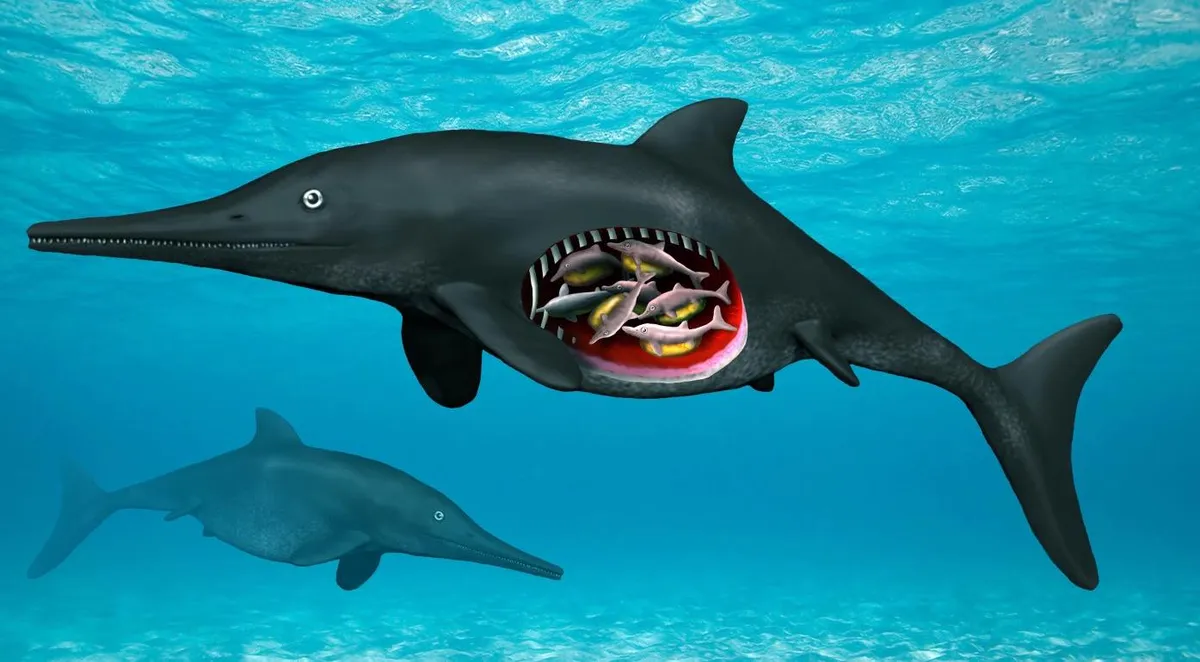
The discovery of a 180-million-year-old ichthyosaur fossil in Mistelgau, Germany, reveals significant insights into the survival and feeding adaptations of these ancient marine reptiles. The specimen belongs to the genus Temnodontosaurus and measures an estimated 21 feet in length.
The fossil includes a nearly complete skull, lower jaw, shoulder girdle, spine, and more than 100 teeth. However, it shows signs of severe jaw injuries that likely limited the animal’s ability to catch prey. This finding challenges previous assumptions about the survival timeline of ichthyosaurs in the region.
Key findings:
- The fossil is one of the youngest finds of the ichthyosaur genus to date.
- Gastroliths, or stomach stones, found in the abdominal cavity suggest a shift in feeding behavior.
- The presence of worn teeth indicates that the ichthyosaur managed to survive despite its injuries.
Stefan Eggmaier noted, “The fact that it nevertheless survived is evidenced, among other things, by its heavily worn teeth and gastroliths, which we were able to identify in the abdominal region.” Ulrike Albert added that this fossil is significant for understanding ecological dynamics in Jurassic seas.
The ichthyosaur resembles modern-day dolphins but is not related to them. Its discovery enhances knowledge about prehistoric survival strategies within marine ecosystems. The findings were detailed in the Journal Zitteliana and contribute to ongoing discussions about convergent evolution among marine reptiles.

Emily Carter
Emily is a lifestyle and culture writer with a passion for storytelling.