







Spain to host 2030 World Cup as defending champions
 22.07.2026
The 2030 World Cup is set to be a unique tournament, spanning six countries and three continents. Spain, Portugal, and Morocco will serve as the primary host nations, with the initial three matches taking place in Uruguay, Argentina, and Paraguay to commemorate the tournament’s 100th anniversary. This marks the first time a World Cup will be held across such a wide geographical area.
The opening match on June 8, 2030, will be played in Montevideo, Uruguay, at the Centenario Stadium, which is undergoing renovations to increase its capacity to 63,000. Following this, games will be held in Buenos Aires, Argentina, and Asunción, Paraguay, before the tournament shifts to Europe and North Africa for the group stage. All six host nations will automatically qualify for the tournament.
Host Nations and Venues
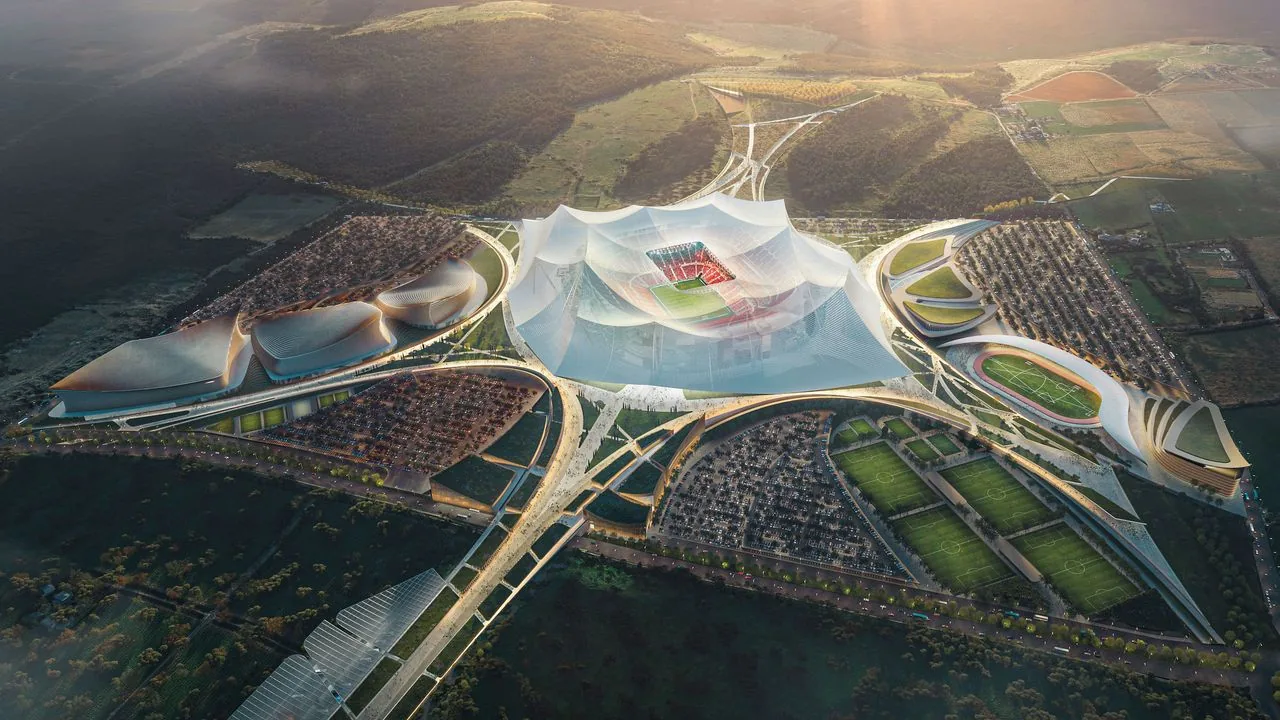
Spain, hosting for the first time since 1982, will stage the majority of the matches, with games planned for Madrid and Barcelona, among other cities. Portugal will host World Cup matches for the first time, with Lisbon and Porto confirmed as venues. Morocco will make history as the first North African nation to host, with matches spread across six cities, including Tangier and Agadir. The country is also constructing the Grand Stade Hassan II in Benslimane, which is projected to be the world’s largest football stadium with a capacity of 115,000.
The location of the final match, scheduled for July 21, 2030, is still to be determined. Contenders include Madrid’s Santiago Bernabéu, a redeveloped Camp Nou in Barcelona, and Morocco’s Grand Stade Hassan II. A decision from FIFA is expected in December 2026.
Early Team Prospects for 2030
As the defending champions, Spain is anticipated to be a strong contender in 2030. The team, under Luis de la Fuente, is expected to feature a core of players who will be in their prime. Goalkeepers such as Unai Simón (32) and Joan García (29) could return, alongside defenders like Marc Pubill (26) and Pau Cubarsí (23). Midfielders Gavi (25) and Pedri (27) are also projected to play significant roles, with attackers Nico Williams (27) and Lamine Yamal (22) contributing to the team’s offensive power.

France, with Zinedine Zidane reportedly taking over as coach, will look to improve on previous performances. Key players like Kylian Mbappé (31), Michael Olise (28), and Désiré Doué (24) are expected to lead their attack. England, despite recent setbacks, is also poised for a strong showing, with a midfield featuring Declan Rice (31), Jude Bellingham (26), and Kobbie Mainoo (25). However, questions remain regarding their attacking options and goalkeeping position.
Morocco, benefiting from their co-hosting status and recent strong performances, including back-to-back World Cup quarter-final runs, is another team to watch. Players such as Achraf Hakimi (31), Chadi Riad (26), and Ismael Saibari (29) are expected to be central to their campaign. Argentina, despite the absence of Lionel Messi, will rely on players like Julián Álvarez (30) and Lautaro Martínez (32) in attack, with Enzo Fernández (33) anchoring the midfield. Portugal will feature goalkeepers like Diogo Costa (30) and defenders such as Gonçalo Inácio (28) and Nuno Mendes (27).
Norway, with Erling Haaland (29) leading their attack, is expected to be a formidable opponent. Other teams like Côte d’Ivoire and Brazil also possess strong talent pools. Côte d’Ivoire could see players such as Yahia Fofana (29) in goal and Karim Konaté (26) in attack. Brazil, under a new coach, will look to players like Vinicius Jr (29) and Rodrygo (29) to lead their next generation. The 2030 World Cup will feature 104 matches over approximately six weeks.
Read Also
Source: theguardian.com

Ishaan Kapoor
Sports correspondent covering cricket, football and international competitions.