



Uefa maintains World Cup boycott threat despite Fifa’s backing for Infantino
 07.08.2026
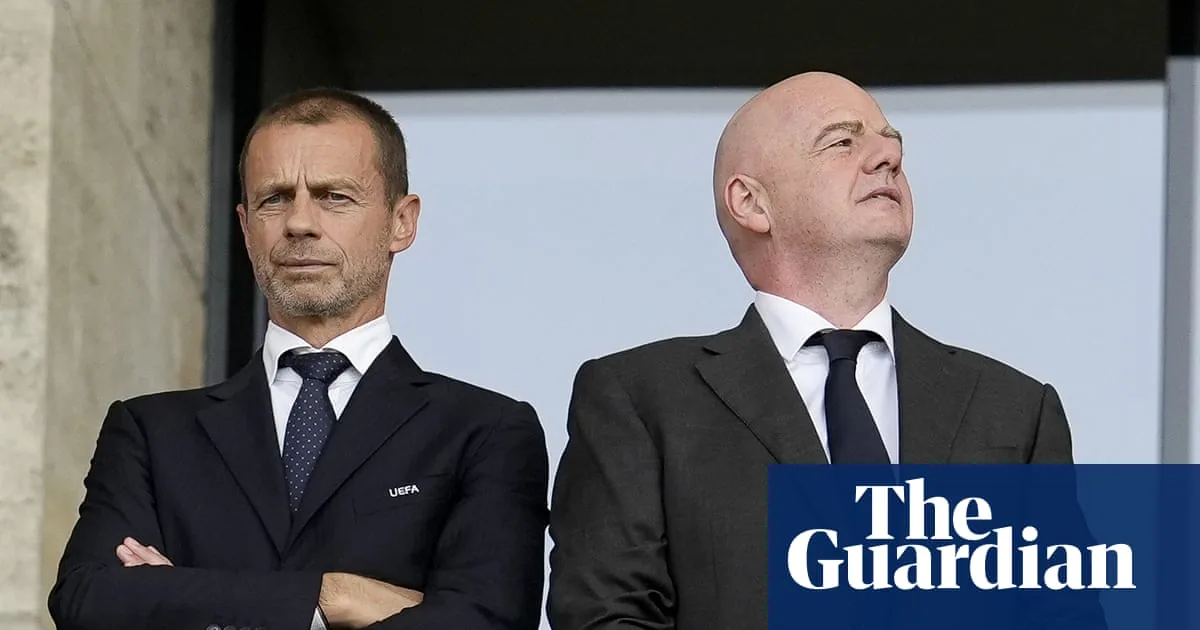
Uefa has reaffirmed its stance that a boycott of Fifa-run competitions remains a possibility, reiterating its loss of confidence in Gianni Infantino‘s presidency. This position was maintained even after Fifa publicly supported its president.
The European governing body had previously stated conditions for averting a boycott, which included the withdrawal of proposals to sell stakes in major competitions and assurances that such attempts to alter the game would not be made again. Uefa indicated that these conditions have not been met.
Uefa’s Conditions and Concerns
Uefa’s 55 member associations had agreed to boycott Fifa tournaments if Infantino did not withdraw his privately funded Fifa Forward Enterprise (FFE) scheme. Although the plan was scrapped, Uefa stated that the necessary terms to avert the boycott have not been fulfilled. The organisation had previously described the FFE proposal as a “shabby, back room, opaque deal.”
The English FA has formally withdrawn its support for Infantino, reacting to the plan to sell stakes in the World Cup to private investors. Uefa’s statement on Saturday made it clear that it had lost confidence in Infantino’s presidency, a position that continues to hold. The recent announcement of support for Infantino from some Fifa employees, whose careers are dependent on his favour, was stated to change nothing for Uefa.
Concerns within Uefa also stem from a meeting in Rabat, Morocco, where Infantino met with members of the Fifa management board. Some within the European confederation believe that the statement from this meeting was not representative of the entire world governing body and lacked consultation with the council or membership. There is a perception that Infantino is attempting to avoid personal responsibility by distributing blame for the aborted proposals.
Divisions and Support for Infantino
Despite the show of unity following the Rabat meeting, divisions within Fifa’s leadership are apparent. Notably, Arsène Wenger, Fifa‘s chief of global development, reportedly declined an invitation to the meeting, seeking to distance himself from Infantino. Wenger had previously criticised the World Cup sell-off plans, stating their scrapping was “absolutely necessary and beyond question.”
Kevin Lamour, Fifa’s chief operating officer, who had called the FFE proposals “the project of one person,” was not invited to the Rabat summit. Other absentees included Jill Ellis, chief football officer, and Sarai Bareman, chief women’s football officer. Lamour had previously stated that “the time has now come for football’s political leaders to ask themselves the right questions and make the right decisions.”
While Fifa acknowledged “mistakes” regarding FFE and issued an apology for excluding the Fifa Council and member associations from the process, Uefa believes there has been no direct accountability for the controversy. Uefa continues to seek answers to key questions, including who was involved in the FFE plan, whether there was a competitive tender process, and if Infantino stood to benefit personally.
In contrast to Uefa’s stance, other confederations have expressed support for Infantino. The Confederation of African Football (Caf) executive committee unanimously reconfirmed its support for Infantino, thanking him for his backing of African football. Lamin Kaba Bajo, president of the Gambia Football Federation, praised Infantino’s “courage” and expressed increased support for him. Conmebol, the South American confederation, stated it would not support any action or procedure that disregards Fifa’s mechanisms before the presidential election.
Only Jordan, among the few countries that did not back Infantino before last week, has publicly stated it will not vote for his re-election in March. The president of the Jordan Football Association, Prince Ali bin al-Hussein, confirmed his opposition to Infantino despite receiving bonus payments from Fifa that were owed from the Arab Cup.
Potential Boycott and Future Actions
The possibility of a boycott remains Uefa’s primary leverage. If no agreement is reached, the Fifa Women’s U20s World Cup, scheduled to begin in Poland on 5 September, could be the first tournament affected by a Uefa-led boycott. Six European countries, including England, are expected to participate in this event.
Uefa has also considered other options, such as forcing an emergency meeting of the Fifa Council or triggering a vote of no confidence through an extraordinary congress. However, securing the necessary support from other confederations and member associations for these actions has proven challenging. A vote of no confidence would require a majority of Fifa’s 211 member associations, equating to 106 votes.
Another potential strategy for Uefa is to find a unity candidate to challenge Infantino in the election next March. Concacaf president Victor Montagliani is considered a possible contender. However, any delay could allow Infantino to strengthen his position, particularly with new funding for member associations expected to be announced by the end of the year.
The global players’ union, Fifpro, has also condemned what it termed “a profound abuse of presidential power” regarding the FFE scheme. Fifpro has called for governance reforms and demanded that players be given voting rights on the Fifa council. Conmebol also expressed concern over “repeated unilateral actions taken without resorting to dialogue.”
Source: bbc.com

Ishaan Kapoor
Sports correspondent covering cricket, football and international competitions.