









England manager Tuchel expresses dissatisfaction despite World Cup quarter-final win
 13.07.2026
Tuchel’s Post-Match Assessment
England manager Thomas Tuchel has voiced concerns regarding his team’s performance following their World Cup quarter-final victory over Norway. Despite the positive result, Tuchel indicated that he was not satisfied with how his side played, stating, “We made life very difficult for ourselves.” He acknowledged the team’s effort, spirit, and belief in overcoming adversity but stressed that he believes they can perform better.
Tuchel highlighted several areas for improvement, noting that the team’s play was “sloppy,” involved “a lot of technical mistakes,” and lacked sufficient speed and repetition. He observed significant momentum swings during the match, suggesting that England contributed to their own difficulties on the pitch.
Tactical Intentions and Execution
Tuchel’s squad selection for the World Cup was reportedly based on players fitting specific tactical roles, with principles such as dominating possession, aggressive pressing, and deliberate passing to draw out opponents. The strategy involves accelerating play to find forwards in space after enticing pressure, and attacking down the flanks with wide triangles and rotations against defensive blocks.
While glimpses of these tactics have been seen throughout the tournament, Tuchel remains unsatisfied with their consistent application. He specifically mentioned that England was “not repetitive enough” against Norway, likely referring to the team’s inability to maintain longer spells of short passing designed to draw out the opposition. This approach aims to create space for attackers, either out wide or through long balls over the top.
During a group stage match against Ghana, Tuchel was heard instructing his players to use “short, short, short” passes before executing a “long switch.” This tactic was observed in the first quarter against Norway, where England attempted to draw defenders to one flank before switching play to the far-side winger, often Noni Madueke. However, the wingers did not capitalise on these opportunities, and the repetitive baiting of pressure diminished as the game progressed. England’s first-half possession of 68% notably dropped to 44% in the second half.
Tuchel’s frustration also likely stemmed from the underutilisation of wide triangles and positional rotations, which he intended to be a key attacking strategy. Norway’s 4-5-1 defensive shape, with wide midfielders holding their positions rather than dropping back, presented ideal conditions for England to exploit these wide areas. However, England was “not fast enough” in executing these movements, failing to play the ball quickly into open spaces. This led to instances where play slowed down, and passes were forced through the middle, resulting in turnovers.
Controversial Goal and Resilience
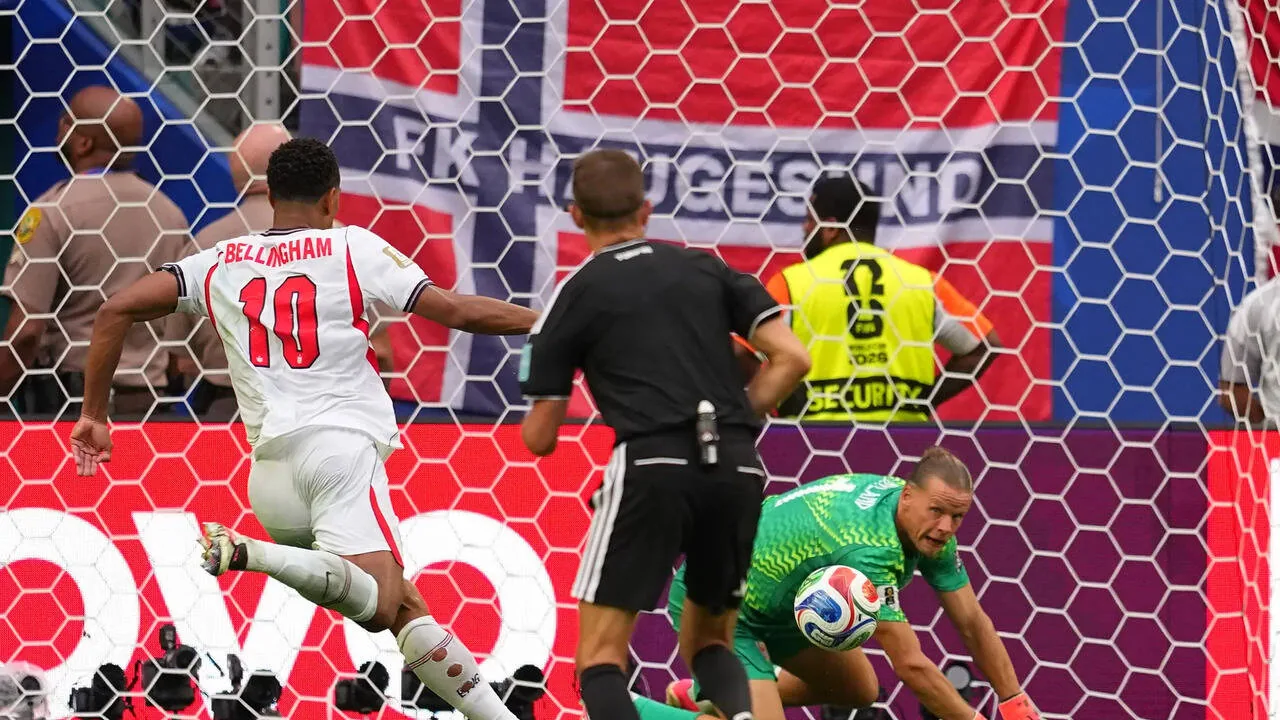
The match also featured a controversial incident surrounding Jude Bellingham’s equaliser. Norway coach Ståle Solbakken stated that the ball appeared to strike an overhead camera cable before the goal, an incident that occurred late in the first half. Goalkeeper Ørjan Nyland and Solbakken appealed to the referee, but the protests were dismissed, and the goal stood. Television replays reportedly showed contact, though FIFA later maintained there was “no evidence that the ball touched the overhead wire and changed the movement of the ball.”
Under the Laws of the Game, play should be stopped and restarted with a dropped ball if the ball touches an outside object like an overhead cable. However, as officials did not detect contact, play continued, and England capitalised. Solbakken expressed disappointment but chose not to dwell on the incident, praising his players for their tournament performance. He suggested the alleged contact caused a misunderstanding among his players, affecting their defensive response.
Despite the tactical shortcomings highlighted by Tuchel, England found ways to win. For their first goal, a long goal-kick from Nyland landed at Elliot Anderson’s feet, catching Norway in a disorganised defensive shape. Anderson’s direct run committed defenders, creating space for Anthony Gordon and ultimately leading to Bellingham’s finish. This pattern of exploiting disorganised defences after quick turnovers was also observed in England’s opening goal against Mexico.
England’s winning goal against Norway came after defending a corner, with the opposition again not in their organised shape. Morgan Rogers’ long-range shot was parried by Nyland, and Bellingham, showing anticipation, tapped in the rebound. Bellingham commented on the psychological aspect of the game, stating, “The game is split into loads of different facets – technical, tactical, and, the biggest one is psychological, managing adversity.” This resilience and ability to thrive in chaotic situations have been a notable characteristic of England’s campaign.
Read Also
Source: bbc.com

Ishaan Kapoor
Sports correspondent covering cricket, football and international competitions.