








Argentina faces FIFA disciplinary action after displaying Falklands banner following England match
 16.07.2026
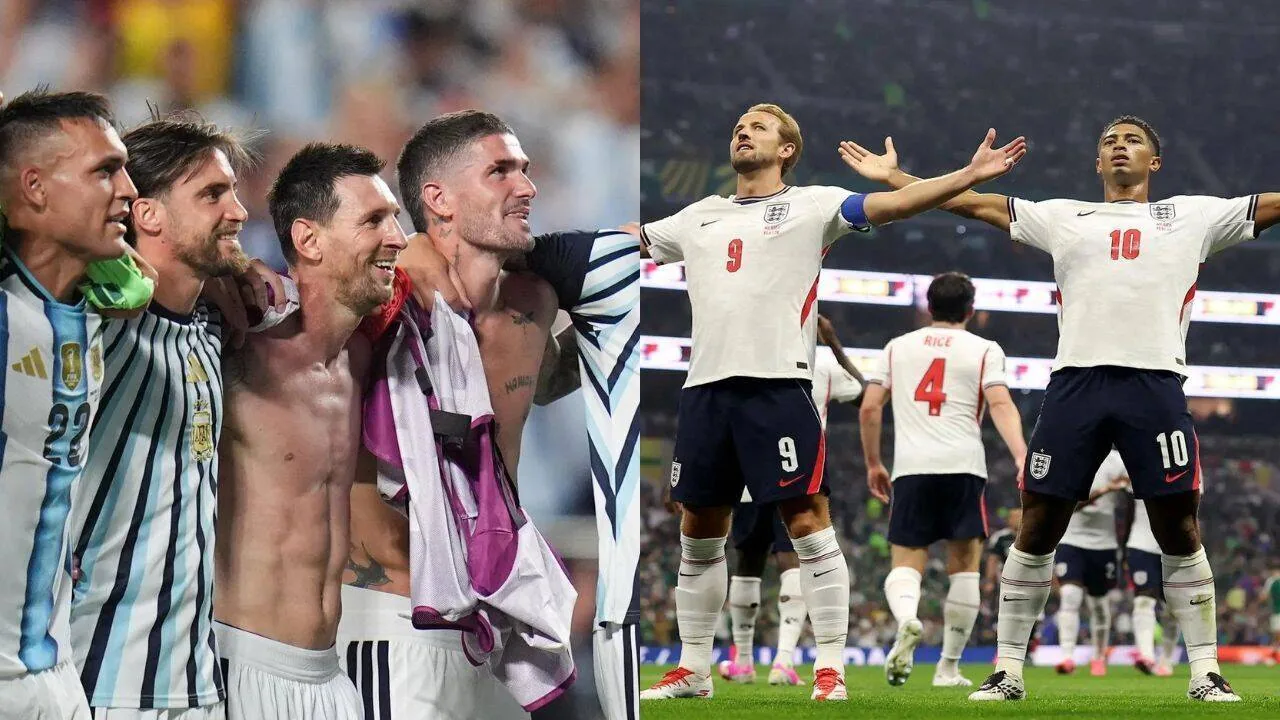
Argentina could face disciplinary action from FIFA after players displayed a banner referencing the Falkland Islands following their World Cup semi-final victory against England. The banner, which read “Las Malvinas son Argentinas” (The Falklands are Argentine), was shown after Argentina secured a 2-1 win in Atlanta, booking their place in the final against Spain.
The display follows a previous incident in 2014 when the Argentine Football Association was fined £20,000 by FIFA for a similar banner before a friendly match against Slovenia. FIFA had stated then that the gesture breached rules concerning political action and team misconduct.
The Falkland Islands, a British overseas territory, have been the subject of a sovereignty dispute between Britain and Argentina. A conflict over the islands, located 300 miles off Argentina’s east coast, occurred from April to June 1982, resulting in the deaths of 655 Argentine and 255 British servicemen, along with three people from the islands.
Pre-match comments and post-match reactions
Ahead of the semi-final, Argentina’s vice-president, Victoria Villarruel, made comments on social media platform X, referring to England as “pirate usurpers” and stating that the match was about “standing up to the invaders.” She also posted after the victory, reiterating that “The Falklands are Argentine” and noting that while bringing banners to the stadium was banned, the sentiment remained strong.
Villarruel’s remarks highlighted the political significance she attached to the match, stating it was “not just another match.” She also mentioned that against the English, “it’s always something more,” referencing the Falklands, Diego Maradona, and Lionel Messi’s participation.
In contrast, Argentina’s manager, Lionel Scaloni, had expressed his reluctance to mix football with politics before the semi-final. He stated that it was a football match and that he could not mix the two, especially out of respect for the historical events. Scaloni described the 1982 period as a “very sad period in our history” and emphasised that while remembering those involved, the focus should remain on the game.
Historical rivalry and player perspectives
The semi-final match itself was held under increased security measures due to the historical tensions between the two nations. Argentina achieved a dramatic late comeback, with goals from Enzo Fernandez and Lautaro Martinez securing their win against Thomas Tuchel’s side.
This encounter marked a significant moment for Argentina captain Lionel Messi, who faced England for the first time in his international career. Despite representing Argentina for over two decades and playing against many other World Cup-winning nations, Messi had not previously competed against England.
Messi described the match as “special” following Argentina’s 3-1 extra-time victory over Switzerland in the quarter-finals. He noted that it was his first time playing against England and acknowledged them as a strong team, making the semi-final clash particularly significant.
The rivalry between England and Argentina is one of international football’s long-standing ones. Their last competitive meeting before this semi-final was during the 2002 FIFA World Cup, where England secured a 1-0 victory. Argentina reached the semi-finals after winning all three of their Group J matches and then overcoming Cabo Verde, Egypt, and Switzerland in the knockout rounds.
Following their victory against England, Argentina will now prepare to face Spain in the World Cup final on Sunday.
Read Also
Source: bbc.com

Ishaan Kapoor
Sports correspondent covering cricket, football and international competitions.